
Congress Created "Expedited Removal" To Speed Up Routine Deportations -- But Federal Judges Know Better.
A District Judge Has Determined That Expedited Procedures For Removing Illegal Aliens Make Her Unhappy -- So She Blocked Their Use.

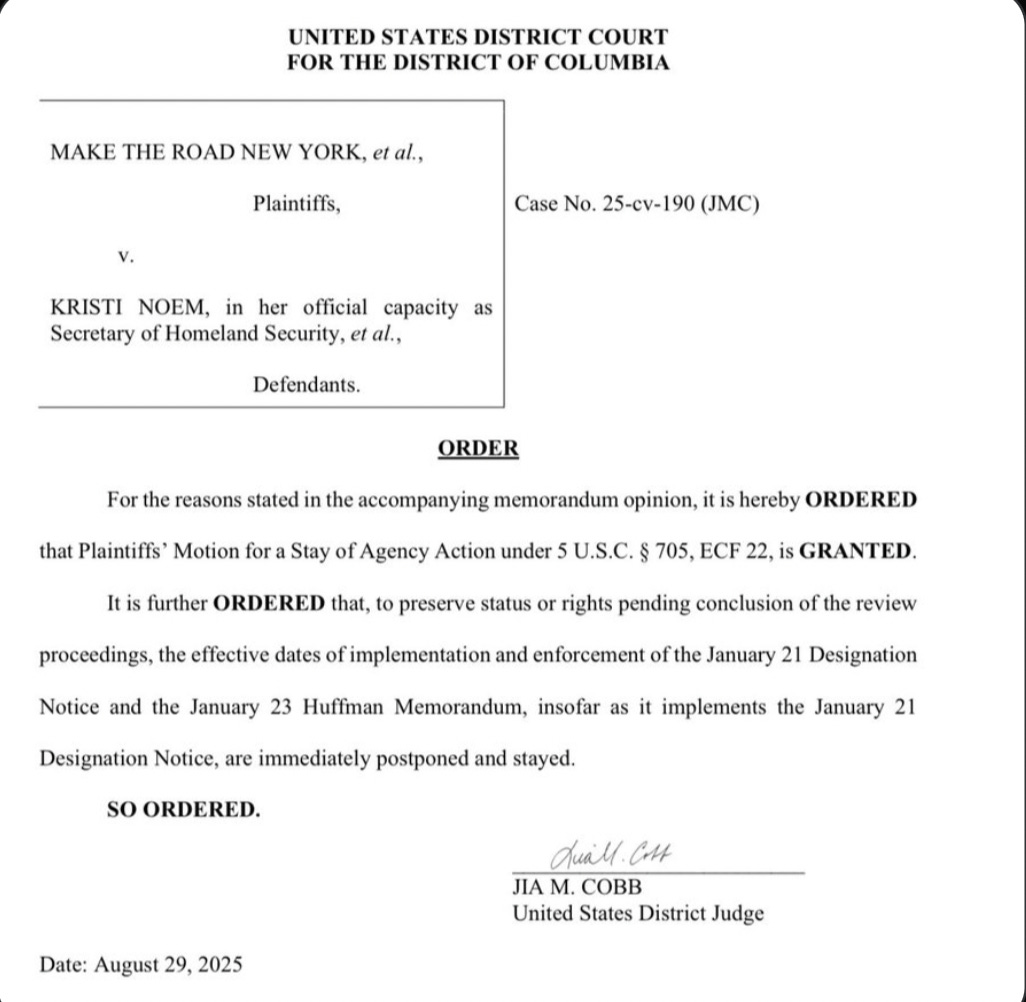
When Congress amended the Immigration and Nationality Act for the purpose of streamlining the deportation process — and eliminating judicial bottlenecks that brought deportations to a grinding halt — it created two processes by which illegal aliens could be removed from the country.
The first is the “normal” Sec. 240 process. This involves a hearing before an Immigration Judge, presentation of evidence by the DOJ’s immigration attorneys, a right to appeal the Immigration Judge’s decision to the Board of Immigration Appeals, and a final right of appeal to the Circuit Court of Appeals. This process can takes months from start to finish.
The second process is referred to as “Expedited Removal” — and the procedures crafted by Congress are intended to fit that description. The process is designed to avoid resort to unnecessary procedures in cases where there is no significant issue identified at the outset that would justify application of the “normal” Sec. 240 process. The process is designed to play itself out over the course of several days.
The procedures under each process must meet the requirements of “due process” under the Fifth Amendment. It has long been accepted that illegal aliens found inside the United States have “due process” rights in the procedures employed to remove them. What that “due process” looks like, however, has always been a “fluid” concept that turns on the interests at stake — but that includes the interests of the government as well as the alien.
Last Friday a District Judge in the District of Columbia decided that the “Expedited Removal” process as used by the Trump Administration comes up short in terms of the “due process” it provides, and as reflected in the Order above, suspended the use of expedited removal in the manner that it was being used — which is expressly authorized by Congress in the statute.
